Reducing the total carbon dioxide or greenhouse gas emissions, people use public facilities instead of personal resources as a convenient method of contributing to the worldwide concern issue. To give more effort, manufacturers producing state-of-the-art commercial electric vehicles are the big hero. Also, more and more countries are mandatory banning the sale of traditional ICE trucks to encourage the trade of electric ones. So let’s see who those zero emission workhorses are.
A Swedish brand, Volvo, one of the working-leading manufacturers, now produces commercial electric trucks for the upcoming new future. Their fuel powered ones had set one of the best benchmarks in the field. Now making the shift to electromobility is following the new era’s calling. They stick to the old design for those electric vehicles to fit for the wide open roads.
Scania, a famous big horsepower provider of trucks and buses, formed in 1911, had built production facilities in several countries. It has considerable options for financing, insurance, and rental services to wider customers choices. The new electric trucks have the potential to match or exceed what can be expected from conventional combustion engine trucks, Scania said. They will no doubt play a big role in the electric vehicles market.
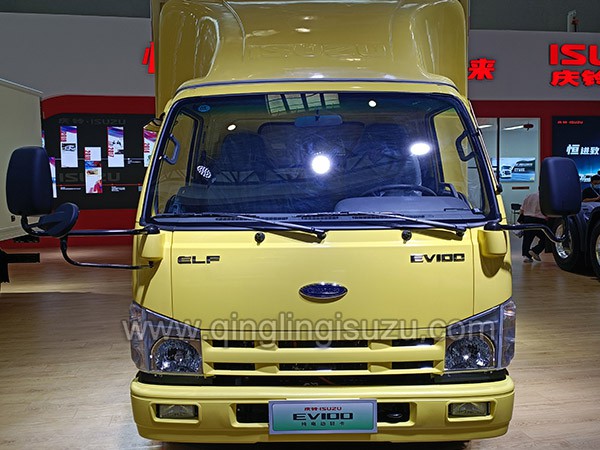
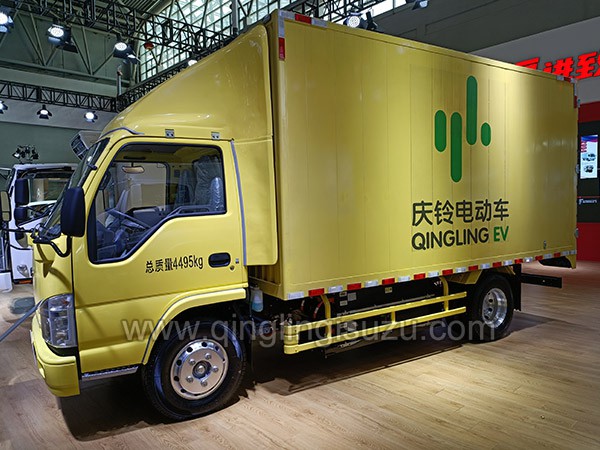
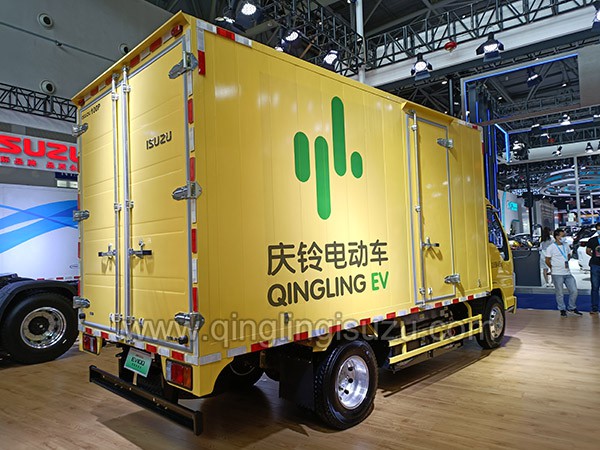
As Isuzu Japan’s joint venture factory in China since the last century, annual output approx. 100000 units, Qingling Isuzu has produced commercial vocational trucks renowned for their long-lasting, lightweight, and stable performance. By developing its full range of commercial electric trucks and FCEVs, the original Isuzu chassis pairing with CATL batteries are the perfect combination to solve the zero emission problem. Qingling Isuzu said, knowing that charging is a significant part of the electric routine process, we will help you design the perfect route to set up the infrastructure to deliver exceptional uptime.
Freightliner is now part of Daimler Truck subsidiary, ranked as the industrial’s best-selling truck. Its Cascadia Evolution equipped with the integrated Powertrain enables the engine to turn at lower RPMs despite road speed, ultimately reducing fuel consumption and friction. After the debut of their electric vehicles, especially semis, they had expressed the forecast that there would be more than fifty thousand semis on the road by 2025. As far as the facts, the numbers of eVehicles haven’t gone anywhere but up.
Lion, a Canadian-based commercial vehicle manufacturer, has various zero emission collective transportation buses as their primary productions. As an innovative green factory, it designs, manufactures, and assembles all the components of the vehicles. “We believe that the electrification of transportation is a major catalyst for improving our society, our environment, and our quality of life,” Lion said. The way they always look out for the new technology will shape Lion into a better OEM along the electric road.
XOS’s headquarters is in Los Angeles with a human-centric culture, designing and manufacturing purpose-built commercial electric vehicles. This uprising 2016 founded company has combined software and vehicles into a Fleet Management Platform to track its electric vehicles better. At last month, XOS announced that they would jointly develop a refrigerated commercial vehicle prototype that is 100% battery-electric with Thermo King.
Kenworth is an American truck manufacturer, founded in 1923, also specializes in commercial vehicles. Its sister company is the famous Peterbilt Motors. The three model lines of electric vehicles introduced last year have been a success. Kenworth’s new model has 536 hp and 670 hp peak power. It looks like somebody doesn’t want to be left in the low carbon long haul.
The UK brand, Tevva, unveiled its Tevva Truck – the first British designed 7.5-tonne electric truck in 2021 with its patented range extender technology (REX). One of their core theories is to use technology to help the world move, and they are confident with a goal that “before this decade is out, more than 100,000 Tevva electric vehicles will be in service.” Just two months ago, their new research base opened in Warwickshire.
Tata manufactured its first commercial vehicle in 1954 and had become the only company in India to provide 4 self-developed engine options: 4SPCR, 3 Lt CR, 5L and 3.8Ltr SGI CNG and 4 Cabin Options. It specializes in making commercial light duty trucks at a profitable price. The Ultra electric models have followed its original idea to accommodate more within a limited space and budget, even though people there haven’t made a fuss about electric vehicles yet.
Renault was the ninth biggest automaker in the world by production volume in 2016. This French brand was one of the world's biggest sellers of light vehicles in 2017. As an active and leading player in sustainable mobility, Renault plays a big role in providing full electric vehicles maximizing each part to improve the quality of life. “We have considerably reduced the environmental footprint of our vehicles without compromising performance or reliability,” Renault said.